TMS (transcranial magnetic stimulation) is an FDA-cleared, non-invasive treatment that uses focused magnetic pulses to stimulate brain areas involved in mood. It's mainly used for depression that hasn't improved with medication, and for OCD. Sessions are done in a doctor's office while you're awake, with no anesthesia and no downtime.
What Does TMS Stand For?
TMS stands for transcranial magnetic stimulation. “Transcranial” means through the skull, “magnetic” refers to the magnetic field used, and “stimulation” describes what it does: it gently activates nerve cells in a specific part of the brain. You may also see it called rTMS (repetitive TMS), because the pulses are delivered in repeated patterns.
How Does TMS Work?
In many people with depression, a mood-regulating area at the front of the brain, the left prefrontal cortex, is less active than it should be. A TMS coil placed against the head creates a focused magnetic field, similar in strength to an MRI, aimed at that small area. The magnetic pulses pass painlessly through the skull and create tiny electrical currents that stimulate nerve cells.
One session doesn't change much on its own. Repeated daily over several weeks, the stimulation helps the brain strengthen the connections involved in mood, motivation and focus. Think of it like physical therapy for a brain circuit that has become underactive.
What Conditions Does TMS Treat?
- —Major depressive disorder that hasn't responded well enough to medication (FDA-cleared since 2008)
- —Obsessive-compulsive disorder (OCD) (FDA-cleared since 2018 on specific systems)
- —Anxiety symptoms that occur with depression (cleared on certain systems)
- —Smoking cessation (cleared on certain systems)
Researchers are also studying TMS for PTSD, bipolar depression and other conditions, but those uses are not FDA-cleared.
What Happens During a TMS Session?
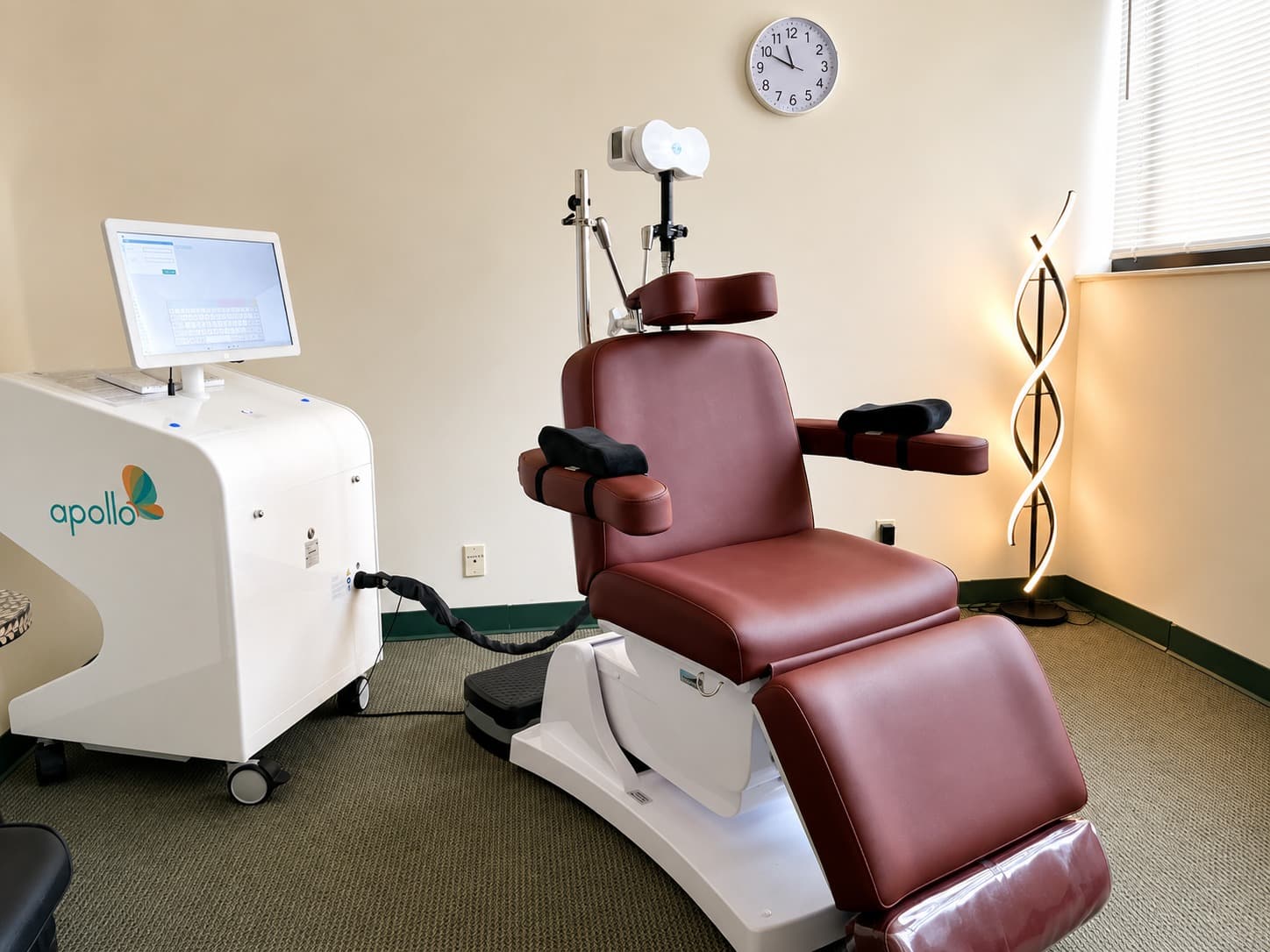
You sit in a reclining chair, awake and alert. The technician positions the coil on your head and starts the session. You'll hear clicking and feel a tapping on your scalp. Many people read, listen to music or simply relax. When the session ends, you get up and go about your day. You can drive, work and exercise as usual.
Your very first session is a bit longer because it includes “mapping”: finding the exact treatment spot and the right energy level for your brain. A typical course is five days a week for about six weeks.
Is TMS Safe?
TMS has a strong safety record. The most common side effects are scalp discomfort and mild headaches, which usually fade within the first week or two. Because TMS isn't a medication, it doesn't cause weight gain, drowsiness or sexual side effects. It doesn't require anesthesia and doesn't affect memory. The most serious risk, a seizure, is rare, and careful screening before treatment keeps that risk low. People with non-removable metal in or near the head are generally not candidates.
How Effective Is TMS?
TMS is typically used for people whose depression hasn't responded to medication, a group that is harder to treat. Even so, many patients see meaningful improvement, and some reach full remission. Results vary, which is why a good TMS provider measures your symptoms regularly and adjusts the plan as you go.
TMS and Medication: Not Either/Or
Many people continue their antidepressant and therapy during TMS. TMS can be added to an existing plan, or used on its own if medications haven't been tolerated. Never stop a medication on your own; talk to your psychiatrist first.
Who Is a Good Candidate?
You may be a candidate if you're an adult with depression that hasn't improved enough after one or more antidepressants, you couldn't tolerate medication side effects, or you have OCD that persists despite treatment. Learn more about TMS for depression.
How to Choose a TMS Provider
- —Psychiatrist-led: a psychiatrist should evaluate you and oversee your treatment
- —FDA-cleared equipment for your condition
- —Progress tracking with standardized symptom scales
- —Insurance support: the clinic should handle prior authorization
- —Location: you'll visit almost daily for six weeks, so choose an office that's easy to reach
If you live in Westchester, Zen Psychiatry offers TMS therapy in White Plains, led by Dr. Shajiuddin Faraz Mohammed. Wondering about coverage? See TMS insurance and cost or call 914-877-1200 to book a consultation.